
en es it

News

Notes, projects and public work.

Abstract illustration about AI, human judgment and creative work

Javier Siriani

The last 20% is ours: what SXSW 2026 revealed about AI and creative work

I just read PwC's insights report on SXSW 2026, and one idea running through the whole document stayed with me. From where I work —between marketing and photography— it feels very real: AI is no longer the future we debate. It is the tool we produce with every day. The question is no longer whether we use it. Now it is how we use it without losing what makes us good at what we do.

The report's title says it better than any slogan: The Future Belongs to the Deeply Human. And for those of us who make things for a living —a campaign, a photo, an idea— that feels less like reassurance and more like a roadmap.

The "walkie talkie" problem

There is one image from the report I cannot get out of my head. Jorn Van Dijk, founder of Framer, spoke about what he called the walkie talkie problem: AI can quickly get you to an 80% viable product, but gives you very little control over the outcome. The missing 20% —iterating, adjusting, deciding— is exactly where things often get worse instead of better if there is no human judgment involved.

That last 20% is everything. It is the difference between a correct photograph and a photograph that says something. Between copy that fills a brief and copy someone actually wants to share. AI gets me to a draft in minutes; craft appears when I decide what stays, what gets cut, and why. That final stretch, the hardest one, is still the most interesting. And it is ours.

Augmenting without eroding

The report is honest about the risk. It cites research showing that junior programmers using AI scored 17% lower in their understanding of their own tasks. Translated to our world: when we delegate thinking, we do not only delegate execution. Automating routine work can prevent us from developing the judgment that only comes from knowing the work deeply.

PwC frames it as a clear fork in the road. AI can strengthen human capability —judgment improves when we focus on the decisions that matter, creativity expands when we can iterate faster— or it can erode it, when we accept the first output and become passive editors of something generic. Same tool, two opposite paths. The difference is made by the person using it.

I see this in photography all the time. AI edits, organizes, selects, even generates. But it does not know why this light matters in this story, or what the person on the other side feels. As someone in the report put it, AI can simulate emotional understanding, but it has no emotion or lived experience. It can generate praise, but it cannot appreciate the person who made the work.

From designing for people to designing for agents

Another idea spoke to me as a marketer: John Maeda described the shift from UX to AX —from user experience to agent experience. Increasingly, AI agents mediate discovery and evaluation before a person ever reaches the original source. A human arriving on a website wants a story; an agent needs structured, labeled data it can act on.

For brands, this is huge. We have to build for both audiences: the person who feels something and the algorithm that summarizes, infers and ranks. And, as the report insists, in a world where the algorithm homogenizes everything and "makes us all sound the same," what survives is the brand willing to be specific, authentic and recognizably itself. Brand identity is one of the last competitive moats left.

What cannot be automated

The insight that moved me most is the simplest one: you cannot automate mattering. The real ROI is in presence, in the human. The report describes a return to the analog, the handmade, the things an algorithm cannot optimize —even a band playing in backyards because people are looking for something real. And it offers a data point that feels like gold to anyone who communicates for a living: people who receive meaningful feedback are 48% less likely to be looking for another job and are five times more engaged.

That is the synthesis for anyone creating content, images or campaigns. AI gives us speed; we give it meaning. Let's use it to remove the repetitive work and free time for what truly differentiates us: judgment, taste, point of view and human conversation.

The future, PwC says, belongs to the deeply human. I would add: it always did. AI simply raised the bar to remind us. Source: PwC SXSW 2026 Insights Report.

July 20, 2026
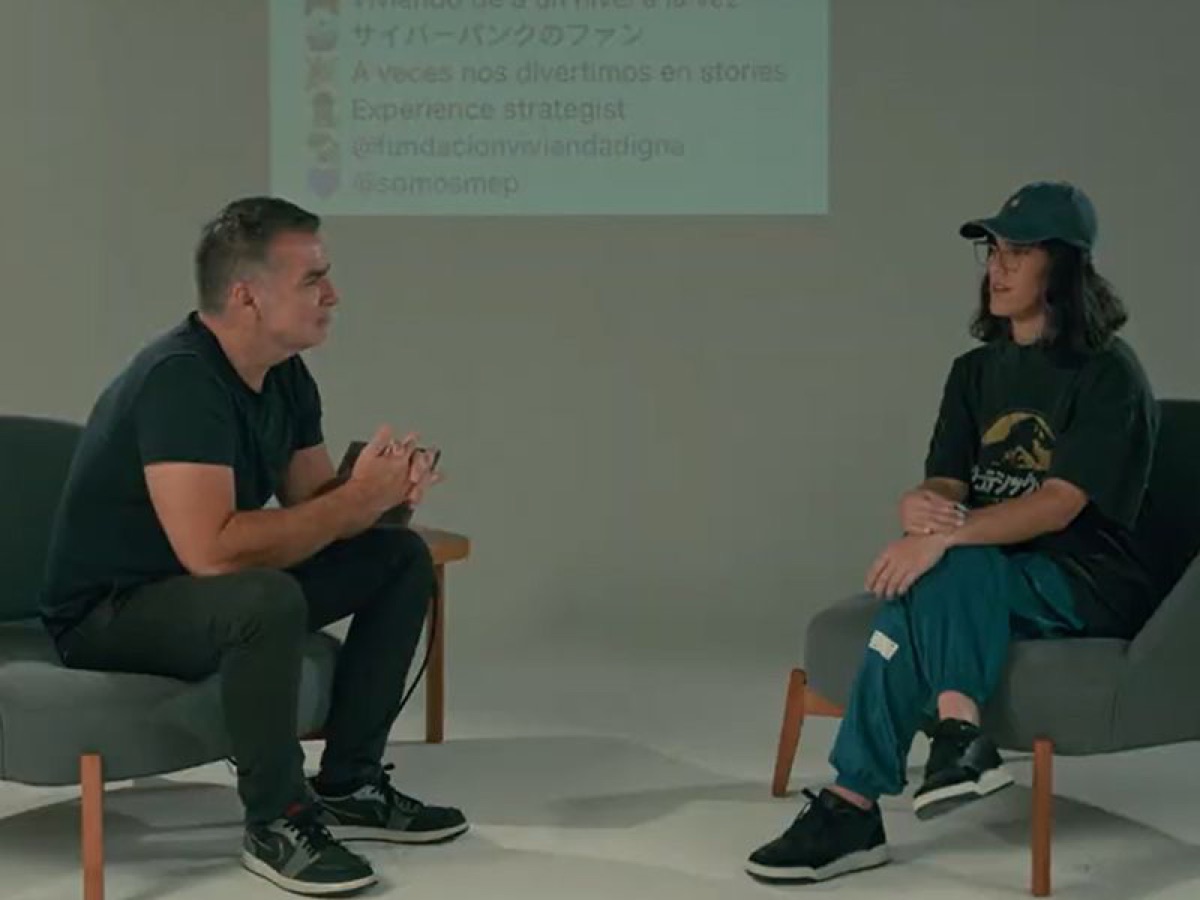
Carlos Perez interviewing Agustina Univaso on EQPLQP by Adlatina

Javier Siriani

EQPLQP, culture, and insights that connect with business

I just finished watching the latest episode of EQPLQP — Carlos Perez’s interview series on Adlatina — and it is worth every one of its 150 minutes. This time with Agustina Univaso, insight director at Gut Buenos Aires.

"In youth there is confidence, wonder, lucidity. But the people we stop to look at are those who seem to have lived several lives. Conscious of their gifts and their own monsters."

The conversation moves through cyberpunk, Neon Genesis Evangelion, Tool, Tarzan, faith, being otaku, Pedidos Ya, UX, intuition... And that is exactly what distinguishes a good insight director: it is not the methodology. It is not the frameworks. It is not the data.

It is the ability to connect culture, anime, faith, music, and a brand brief in the same conversation — and make all of it useful for a business problem.

The best insight is not born in a research room. It is born in people with their own dense, idiosyncratic cultural map, and the discipline to connect it with the brand in front of them.

That is why EQPLQP is always worth it: Carlos does not interview people to extract quotes. He interviews to show how people who think actually think.

Thank you, Carlos, for continuing to build this space. And Agustina — great conversation. Listen to the full episode on Spotify and read the Adlatina article.

June 23, 2026